Timing Belt or Chain: What to Verify on a Used Car
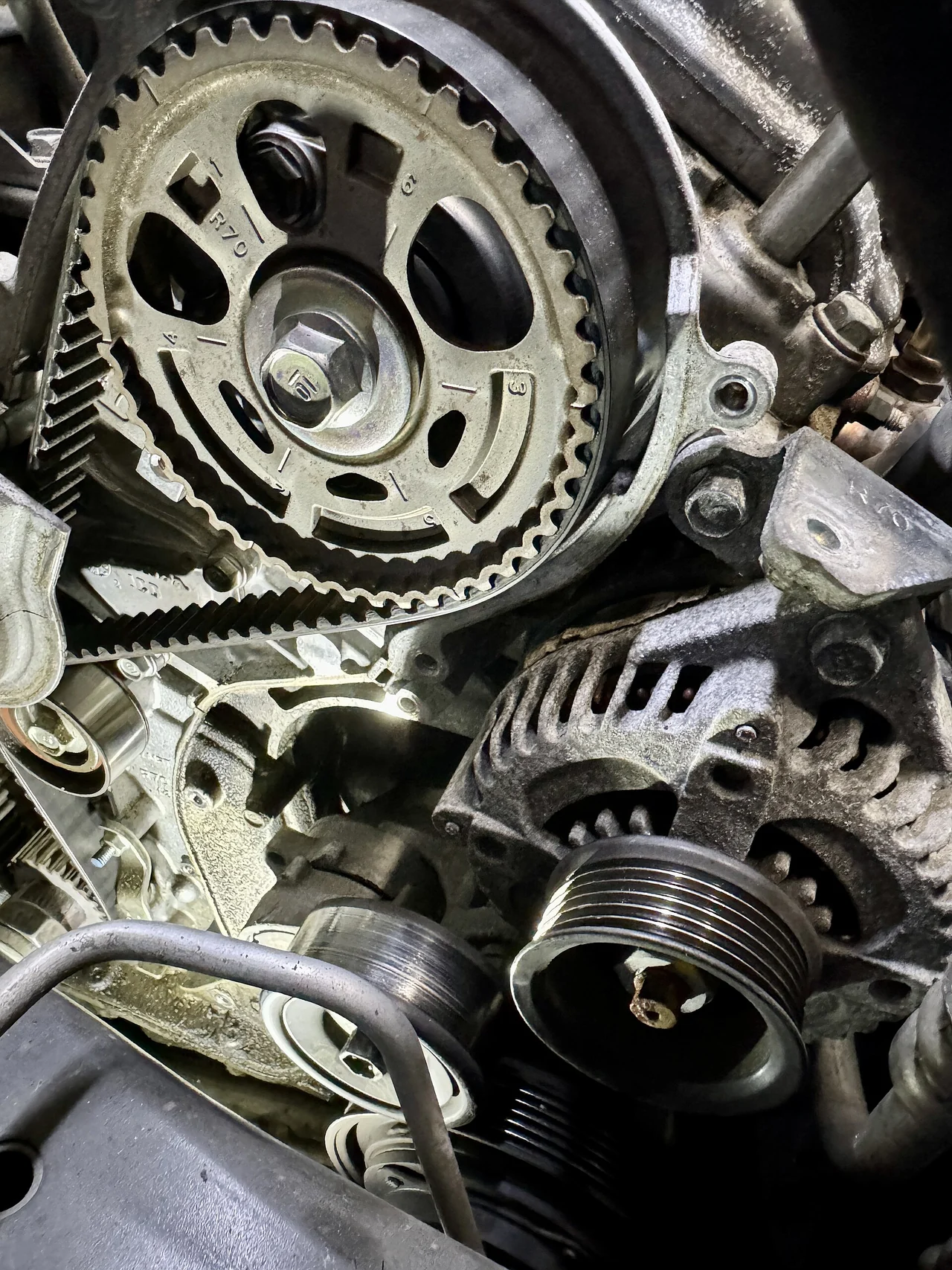

Before asking whether a timing belt has been replaced, establish whether the exact engine uses one. A model name can cover several engines, and a registration year can differ from the manufacturer’s model year. Use the VIN and engine identification to find the appropriate information.
Find the correct schedule
Consult the manufacturer’s owner or maintenance documentation for that engine and market. Where a belt replacement interval applies, check both time and mileage conditions. Avoid borrowing an interval from a similar-looking model or a discussion about a different engine.
A note saying “belts replaced” may refer to an accessory belt rather than the timing drive. Request the date, mileage, parts and labor description. Ask a qualified shop to explain whether related components or procedures are relevant to the quoted work.
Do not treat a chain as a lifetime guarantee
A chain-driven engine still requires appropriate maintenance and can develop faults. Ask the inspector about observed symptoms and what can reasonably be assessed without disassembly. A quiet startup is useful evidence under those conditions, not proof of unlimited remaining life.
If required service cannot be verified, ask the shop whether preventive work is appropriate and obtain a written estimate. Add that amount to the purchase comparison. Do not present an undocumented replacement as either certainly completed or certainly failed.
Use uncertainty in the decision
A lower asking price may cover scheduled work while leaving a reserve, or the combined cost may exceed your budget. The answer depends on the engine and condition. Decide using the correct service requirement and a credible quote rather than a general claim that belts are bad or chains never need attention.
Sources and checks
- Ford: Owner manuals — Example manufacturer documentation portal. Use the manual for your exact vehicle or the corresponding source from its manufacturer.
Sources checked November 2, 2026. Examples are illustrative; current terms and vehicle-specific instructions must be verified.