Used EV Battery Health: What a Range Display Cannot Tell You
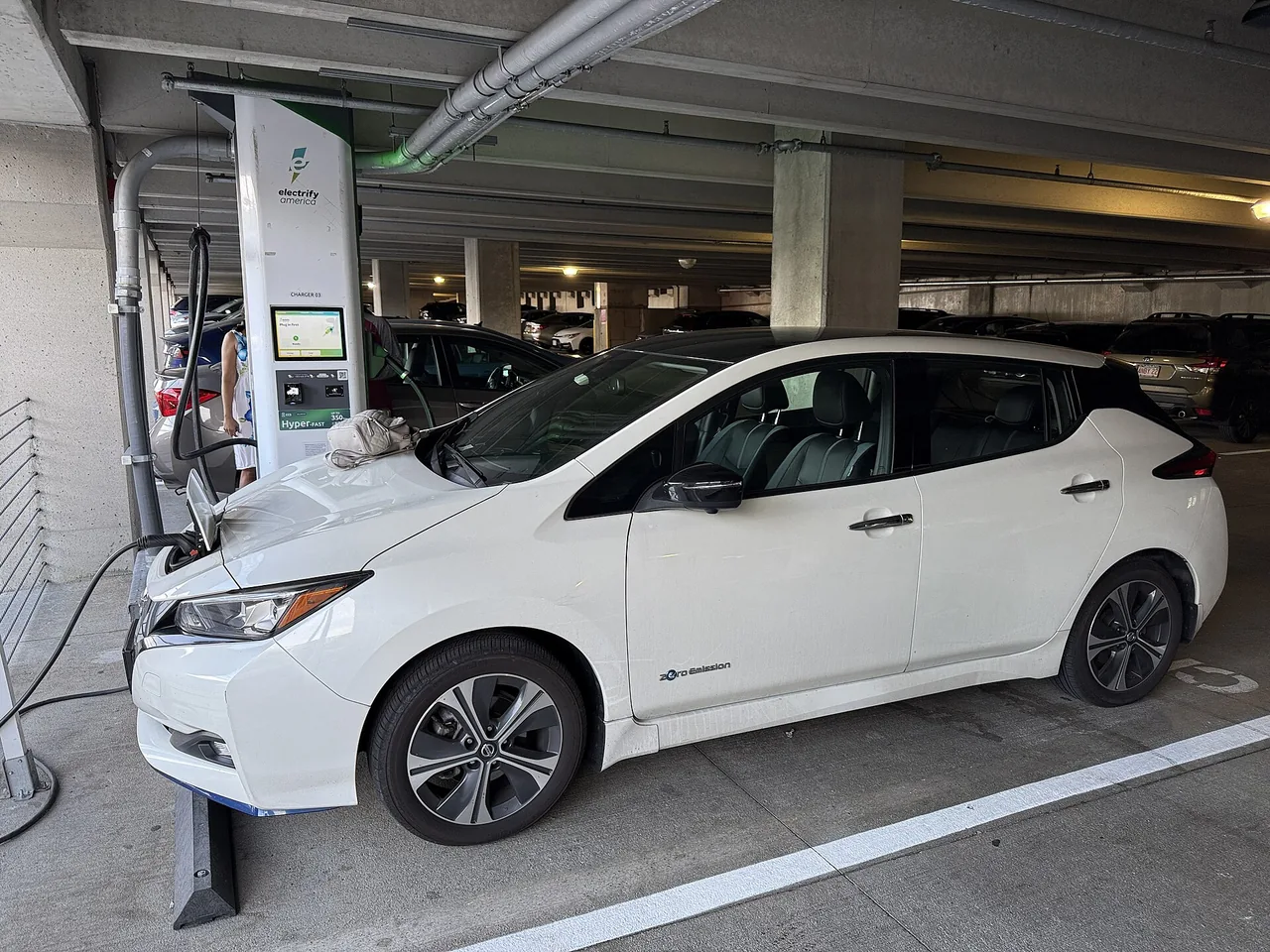

A used EV showing 220 miles at full charge does not necessarily have a healthier battery than one showing 200. The vehicles may use different estimates, have different original capacities or have been driven in different conditions.
The useful question is narrower: how much usable energy can this battery store now, and will the resulting range meet your needs?
Separate charge level from battery health
State of charge describes how full the battery is at that moment. State of health usually describes its condition relative to a reference such as original usable capacity. A battery can be fully charged and still hold less energy than when it was new.
“Battery health: 90%” needs context. Ask what device produced the figure, when it was measured, which reference capacity was used and whether the report concerns the traction battery. Different methods should not be treated as interchangeable.
Request evidence in layers
- Obtain the service and battery-repair history for the VIN.
- Ask whether the manufacturer provides a health report for that model.
- Request an independent EV inspection where the purchase value justifies it.
- Ask the technician to explain limitations, stored faults and recommended follow-up.
A report should identify the vehicle and test date. An attractive chart without a VIN or a description of the method is weak evidence. A clear result is still a snapshot, not a guarantee of future service life.
Use a driving check carefully
A representative drive can reveal whether the car fits your routine. Record starting and finishing charge, distance, weather, speed and climate-control use. The result is a practical observation under those conditions.
Do not deliberately run the pack empty to prove a point. Do not extrapolate a short gentle city drive into a precise winter highway range. If the car barely covers your essential route under easy conditions, its margin is already questionable.
A simple energy example
Suppose a qualified assessment indicates 54 kWh of usable energy, and your planning assumption is 0.30 kWh per mile. Dividing 54 by 0.30 gives 180 miles before any reserve. These figures are illustrative, not a rating for a specific EV.
At 0.36 kWh per mile, the same arithmetic gives 150 miles. That difference shows why consumption matters alongside capacity. Keep an operating reserve suitable for your route and charging options rather than planning every journey to zero.
Read the warranty's two separate questions
Does it cover a failure? Does it cover gradual capacity loss below a stated threshold? Read both sections for the exact model year, plus time, mileage and transfer rules. A capacity reduction may be noticeable to an owner while remaining outside a particular warranty remedy.
If a pack was replaced, confirm whether the documentation identifies a complete pack, individual components or unrelated work. Ask which warranty now applies. The goal is a usable car with understood risks, not the highest percentage printed on an unverified screenshot.
Sources and checks
- Recurrent: Range retention research — Range retention and battery health are different measurements; do not equate them.
- US DOE: Maintenance and Safety of Electric Vehicles — Combustion-engine maintenance remains relevant to hybrids; high-voltage systems require qualified attention.
Sources checked November 2, 2026. Calculations are illustrations, not dealer or lender offers. Confirm current terms for the vehicle and transaction.