Used Cars Under $15,000: A Budget That Leaves Room for Repairs

A $15,000 car and a $15,000 car budget are different things. If $15,000 is all the money available, spending it on the advertised price leaves nothing for registration, a worn set of tires or the first insurance bill.
Start with the amount you can spend after the sale. That number tells you which listings deserve a phone call. The model badge comes later.
Work backward from the total
Here is an illustration, not a quote or a recommended allowance for every buyer. Suppose your available cash is $15,000 and you set aside $1,500 for immediate maintenance and surprises. That leaves $13,500 for the vehicle and purchase charges. If those charges total $1,000, your asking-price ceiling is $12,500.
| Item | Amount |
|---|---|
| Available cash | $15,000 |
| Repair and maintenance reserve | −$1,500 |
| Assumed purchase charges | −$1,000 |
| Maximum vehicle price | $12,500 |
Replace both allowances with local figures. A buyer with a separate emergency fund may make a different choice. A buyer who needs tires and brakes immediately needs a larger reserve.
Three useful places to start
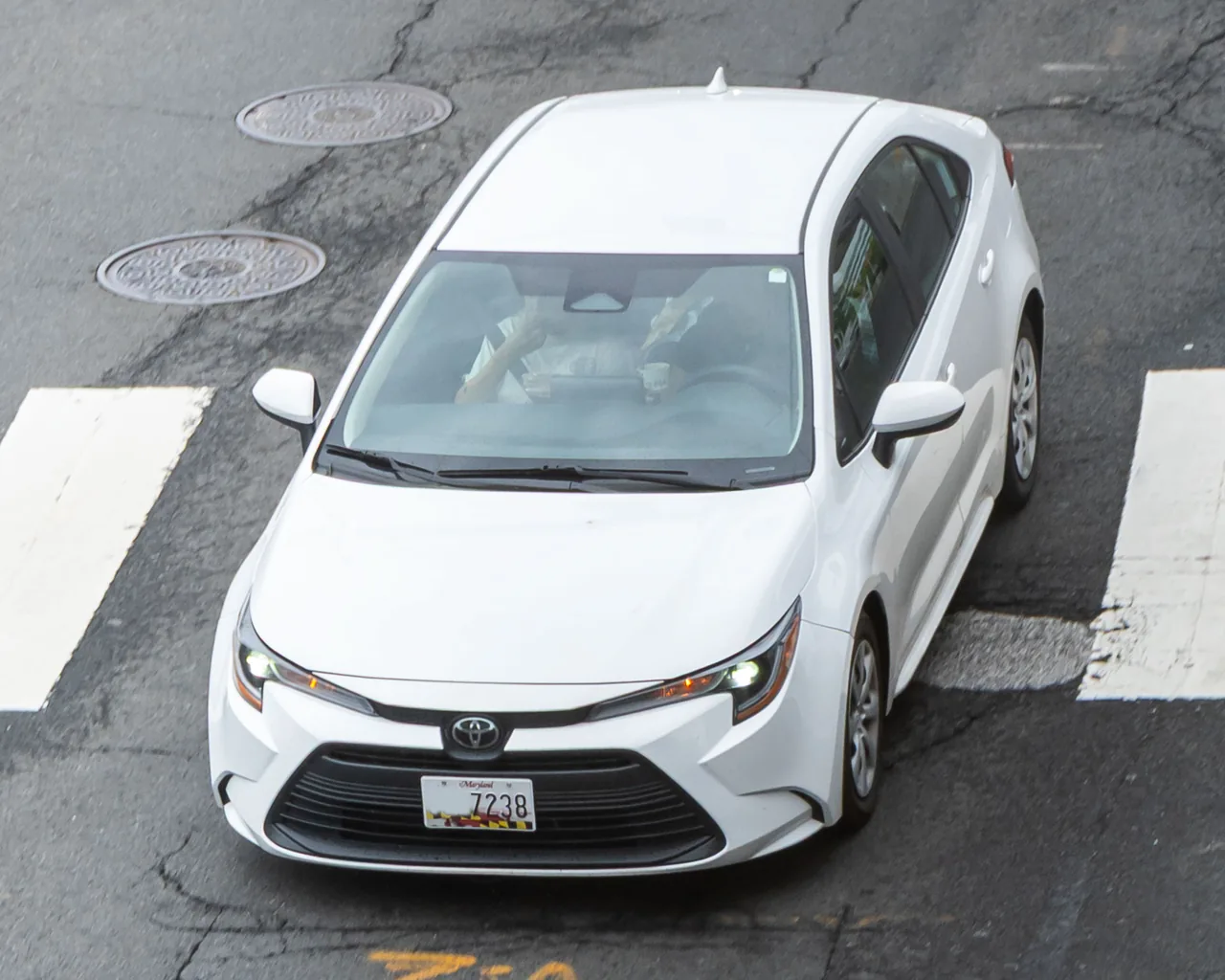
Compact sedans: a Toyota Corolla or Honda Civic gives you a starting point for comparing size, fuel consumption and equipment. These are candidates to investigate, not promises that a particular year or engine will be trouble-free. Verify the exact powertrain and service schedule.
Midsize sedans: compare a Toyota Camry, Honda Accord or Mazda6 if rear-seat space matters. Do not assume a larger sedan automatically costs much more to buy; compare actual local listings. Tire size and powertrain can still change running costs.
Hatchbacks: a Mazda3 or similar compact can solve a cargo problem without moving to an SUV. Bring the object you actually carry. A large opening is more useful than a cargo-volume figure when your stroller will not fit through it.
Compare the next twelve months
Put three cars on one sheet. Record the written out-the-door quote, insurance quote, inspection findings and maintenance due within a year. Add a separate line for anything the seller cannot document. An undocumented timing-belt replacement, where the engine uses one, deserves a question and a repair quote.
A car listed for $11,800 that needs $2,000 of work is not automatically cheaper than a $13,000 example. Compare equivalent condition before negotiating. Ask the inspector which issues must be repaired now and which can be monitored.
What would make the shortlist?
Choose the examples with a verifiable VIN, a coherent service history and a seller who allows an independent inspection. Treat mismatched documents or refusal of inspection as reasons to pause. A clean interior is pleasant; it does not establish mechanical condition.
When you contact a seller, ask one useful question: “Can you send an itemized total for this VIN, without optional products, before I travel?” The answer makes the rest of the budget much easier to judge.
Sources and checks
- FTC: Buying a Used Car From a Dealer — Written purchase quotes, independent inspections and warranty research.
Sources checked November 2, 2026. Calculations are illustrations, not dealer or lender offers. Confirm current terms for the vehicle and transaction.