Trading In a Car With Negative Equity: Follow the Balance


If your loan payoff is larger than the trade-in allowance, the shortfall does not disappear when you change cars. Someone must pay it, either in cash or through the next transaction. A dealer offering to “pay off your loan” has not necessarily agreed to absorb that difference.
Get a dated payoff quote
Ask your current lender for the payoff amount, validity date and payment process. The balance shown in an app may not be the exact amount needed on the day the loan is settled. Obtain a separate written trade-in allowance, then subtract the two figures.
Make the shortfall visible
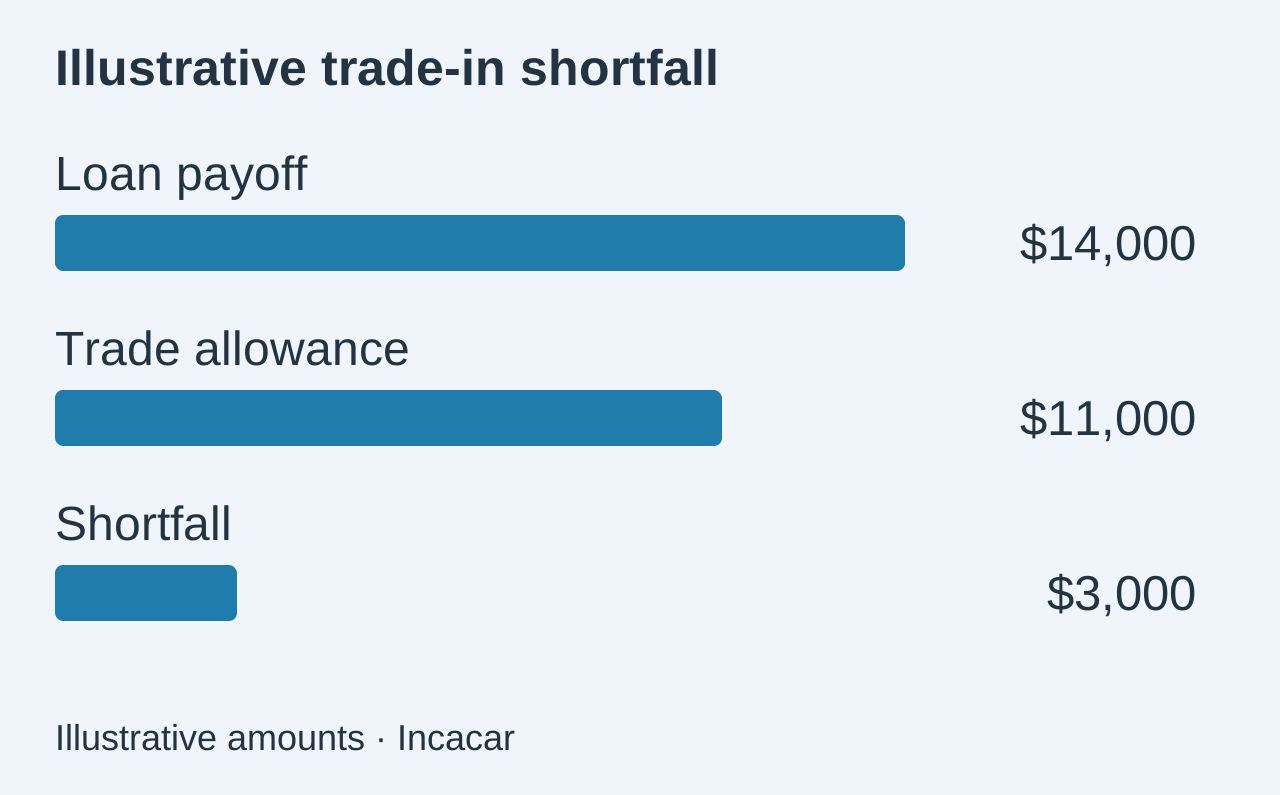
Imagine a $14,000 payoff and an $11,000 trade allowance. The shortfall is $3,000. If a $20,000 replacement purchase is financed and that shortfall is added without other changes, you start from $23,000 before a new down payment and any further applicable charges. These are planning figures, not an offer.
Read the new borrowing amount
Ask the dealer to show the purchase price, trade allowance, old payoff, cash down and amount financed on separate lines. A longer term can make the payment look manageable while keeping the old debt inside the new loan. Compare the total obligation, not just the advertised price of the replacement.
Compare alternatives before committing
Keeping the present vehicle, making extra payments where the loan permits, selling privately or choosing a cheaper replacement can produce different outcomes. Include necessary repairs and transport needs. None is automatically available or best; use current payoff and sale estimates instead of an optimistic private-sale number.
Verify the old loan is actually settled
Understand who sends the payoff and when. Follow up with the original lender rather than assuming the handover completed everything. Keep documents and continue to meet obligations until the lender confirms the appropriate status. For a disputed balance or contract question, contact the lender or relevant consumer authority promptly.
Sources and checks
- FTC: Trade-ins and negative equity — How an old-loan shortfall can enter a replacement transaction.
Sources checked November 2, 2026. Examples are illustrative; current terms and vehicle-specific instructions must be verified.